


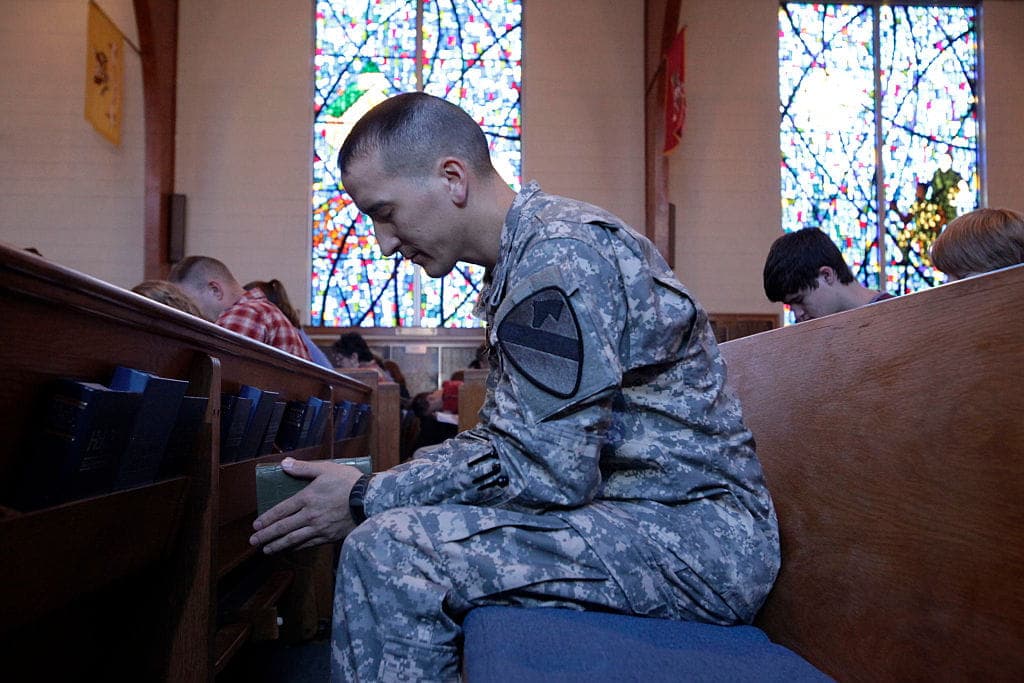

In a controversial move, the Department of Defense (DoD) is reducing the number of religious faiths and belief systems from its personnel records, dropping the total from 211 to only 31. The faith and belief coding system will be renamed to religious affiliation codes. The agency claims the action is more administrative while opponents cry foul, accusing the DoD of taking away their religious identities and imposing politics over religion. Which is the truth?
Secretary Pete Hegseth said in March: “The previous system had ballooned to well over 200 faith codes,” and that it “was impractical and unusable, and many codes were never used at all.” He also informed that 82% of those who identify as being religious only use six of the codes.
Although the military is diverse in faiths, nearly 70% of troops identify as Christian, according to a 2019 congressional report.
“This decrease in religious affiliation codes is not designed to make any claims on the legitimacy of any faith or religious belief, nor is it intended to provide a list of ‘officially approved’ religions,” Pentagon Spokesperson Sean Parnell said in a statement. “Rather, it is designed to allow chaplains to quickly look at the religious composition of their units and determine how they structure resources to best provide for warfighters of all faith groups.” He added that they still have the “ability to freely exercise their religion of choice, or no religion at all.”

However, others claim this move takes away their rights and religious freedoms. “Secretary Hegseth is not ‘streamlining’ anything. He is elevating one narrow religious worldview from the top of the chain of command,” Rev. Paul Raushenbush, a Baptist minister and head of the progressive Interfaith Alliance, told the AP. “The First Amendment does not allow the government to create a hierarchy of faiths, and it certainly does not allow the Pentagon to decide which beliefs are worthy of recognition.”
Military Religious Freedom Foundation co-founder Mikey Weinstein told Military.com that the DoD list is a “middle finger to the United States Constitution’s separation of church and state.” According to the Air Force veteran, these codes have existed to perform services that military personnel want. “Reducing the number of religious faiths from hundreds down to 31 is another absolute, clear, filthy and disgusting, unconstitutional, immoral and unethical attempt to force only the approved solution, getting closer and closer to Christian nationalism.”
Weinstein referred to the Department of Veteran Affairs and how it recognizes faiths and beliefs numbering more than 220 plus more than 80 emblems for headstones. “So, if you're dead, you'll get your emblem. But if you're alive, you can't even get it on your dog tags unless you qualify for one of these faith traditions that in the eyes of Hegseth and other Christian nationalists are worthy of recognition after years of all of the others being there.”
As Task and Purpose reported, “22 of the 31 remaining categories are different Christian denominations. The rest are: agnostic; Bahai; Buddhism; Hindu; Islam; Judaism; Sikh; and ‘no religion’ and ‘other religion.’”
Religious military leaders offer support to a multitude of faiths. For example, a Baptist chaplain might provide services to Methodists, Presbyterians, and non-denominational Christians. A Jewish or Muslim chaplain may serve those from multiple traditions within those faiths. The argument is that broad categories are more useful for operational planning than maintaining hundreds of highly specific codes.
Denouncing Faiths or Restoring Original Intent?
The identification tag, or more commonly known today as dog tags, was first introduced on December 20, 1906. It wasn’t until November 10, 1941, that religion was added to the identifiers. During World War II, soldiers only had three broad religious categories: P (Protestant), C (Catholic), or H (Hebrew/Jewish). The designation was put into place so that chaplains could provide appropriate religious care, and so that burial rites could be done according to the person’s faith. However, it was never intended to be a catalog of religions, or government endorsement of faiths.
In 2017, the Armed Forces Chaplains Board approved adding more designations and changed the terminology from “Faith Group Codes” to “Faith and Belief Codes” that included nonreligious belief systems, which is how we get the 221 entries we have today.
"This brings the codes in line with its original purpose, giving chaplains clear, usable information so they can minister to service members in a way that aligns with that service member's faith background and religious practice," Hegseth said of the change.
So, it seems what this argument comes down to is recognition vs accommodation. Should the religious designations be recognized for all faiths or a means to accommodate faith backgrounds?
More Changes
The list of faiths is only one change being put into place. The rank insignias on uniforms of chaplains are also being redesigned to reflect religion instead of military rank. Hegseth said it relates to the “difficult balance of the duality” of being a chaplain in the military. “A chaplain is first and foremost a chaplain, and an officer second. This change is a visual representation of the fact.”
According to the secretary of war, this move will uplift and celebrate chaplains in their roles. He explained that having their rank visible can cause unease among junior officers or enlisted personnel who might be reluctant to seek help or guidance on sensitive matters including addiction issues or relationship problems.
"Specifically unique to the role of a chaplain, they are first and foremost called and ordained by God. And, while they will retain rank as an officer to those they serve, their rank will not be visible," Hegseth said. "Theirs is a high and sacred calling, but they can only be successful if they are given the freedom to boldly guide and care for their flock.”

These are only two reforms that are in progress right now but Hegseth said “we’re not even close to being done. These are the first steps toward restoring the esteemed position of chaplain as moral anchors of our fighting force.”
The military's religious-identification system began as a simple wartime tool to ensure soldiers received proper spiritual care and burial rites. Over the decades it evolved into a database containing more than 200 faith and belief categories. The current debate is really about whether the system should function as a chaplain-planning tool, as originally intended, or as a detailed catalog of religious identities within the ranks. Supporters argue that the smaller list reduces government involvement in categorizing faiths. Critics argue the opposite, saying fewer categories can make minority faiths less visible. The tension creates a natural liberty-versus-bureaucracy discussion.

.jpg&w=1920&q=75)
.jpg&w=1920&q=75)