


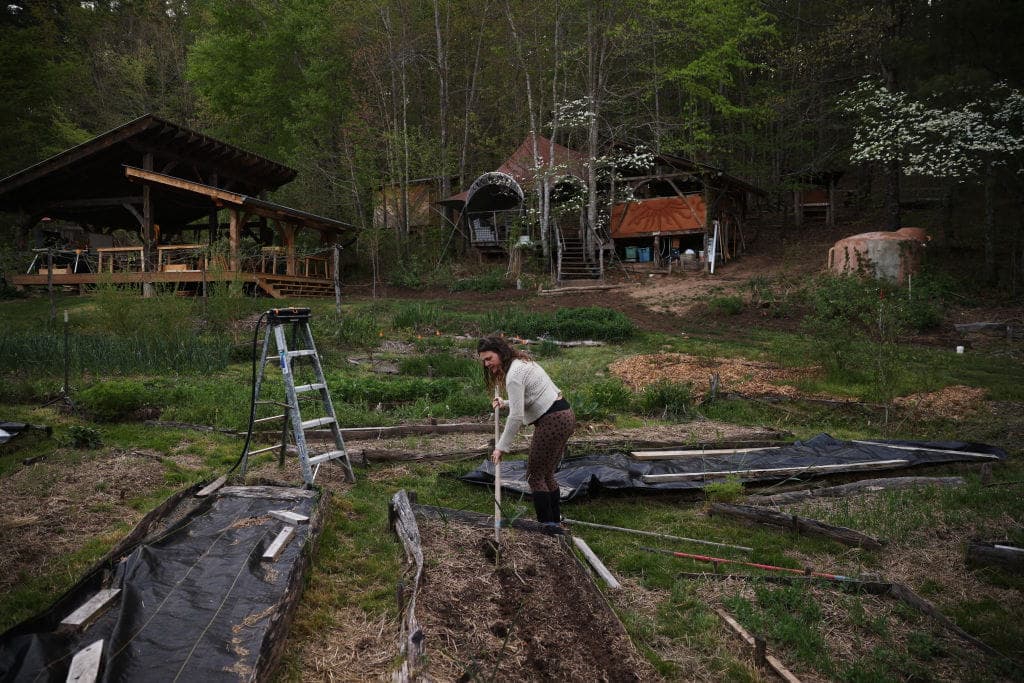

For generations, Americans were told that if they worked hard and played by the rules, they could achieve the American Dream. Today, many believe homeownership – an essential component of that goal – is slipping out of reach. Now, President Donald Trump and the GOP have a historic opportunity to restore that promise for younger generations through another Homestead Act.
The Homestead Act
The original Homestead Act, which was passed on May 20, 1862, allowed adult citizens to claim 160 acres of surveyed public land, and all they had to do was live on and cultivate it for half a decade. After the five-year mark, the “original filer was entitled to the property, free and clear, except for a small registration fee,” according to the National Archives. The act was part of the 1860 Republican Party platform. Maybe it’s time for the modern GOP to bring that same energy into 2026.

The federal government currently owns around 640 million acres of land. Last year, the Trump administration announced that it would make 13 million acres available for coal mining. Not only that, but the administration would also allocate $625 million to restart or upgrade coal-fired power plants.
Now consider what that same approach could do in a second Homestead Act. If each homesteader received five acres, 13 million acres could give 2.6 million young Americans a real shot at the American Dream. Yes, that’s just a fraction of the 74 million Millennials and 71 million “Zoomers,” but it would be a meaningful step in the right direction.
Homestead Act 2.0
Of course, the 1860 Homestead Act wasn’t perfect. The General Land Office dispersed roughly 500 million acres between 1862 and 1904, but only 80 million acres were given to homesteaders – the rest was claimed by speculators, loggers, railroads, miners, and cattle owners.
From Liberty Nation News, Trivia, Facts, Check Us Out
Stay informed.
Today’s news, the Constitution and American history, written for young readers.
Visit GenerationLiberty.com
News, Trivia, Facts, Check Us Out
Stay informed.
Today’s news, the Constitution and American history, written for young readers.
Visit GenerationLiberty.com
A recent survey by The Harris Poll found that nearly 70% of Americans say homeownership requires a six-figure income and the very act of owning a home is a privilege rather than a goal. Seven in ten also believe “the American Dream is becoming a rental reality (74%), as more homes shift into the hands of institutional buyers.” Americans largely believe starter homes are disappearing or being “priced like luxury properties,” researchers found.
This is exactly why a second Homestead Act is worth considering. Young Americans are demoralized when it comes to homeownership, but they’re not looking for handouts. They just want the same shot at the American Dream that their parents, grandparents, and great-grandparents had. If executed properly, another Homestead Act would require beneficiaries to work, live responsibly, and make a long-term commitment to the land and surrounding community – which is exactly what the American Dream has always demanded.
President Abraham Lincoln signed the Homestead Act into law over 160 years ago. His vice president and successor, Andrew Johnson, later praised the legislation, noting that “experience proves its wisdom.” Johnson continued:
“The lands in the hands of industrious settlers, whose labor creates wealth and contributes to the public resources, are worth more to the United States than if they had been reserved as a solitude for future purchasers.”
Presidents Lincoln and Johnson understood that land is best used by hardworking Americans who are given the chance to cultivate it. President Trump once playfully called himself “your favorite president of all time, better than Lincoln.” But when it comes to helping ordinary Americans achieve the American Dream, Lincoln may have Trump beat. Still, 47 has more than two and a half years left in office, and a modern Homestead Act could be just the ticket to close the gap.



.jpg&w=1920&q=75)
.jpg&w=1920&q=75)