
.jpg&w=1920&q=75)

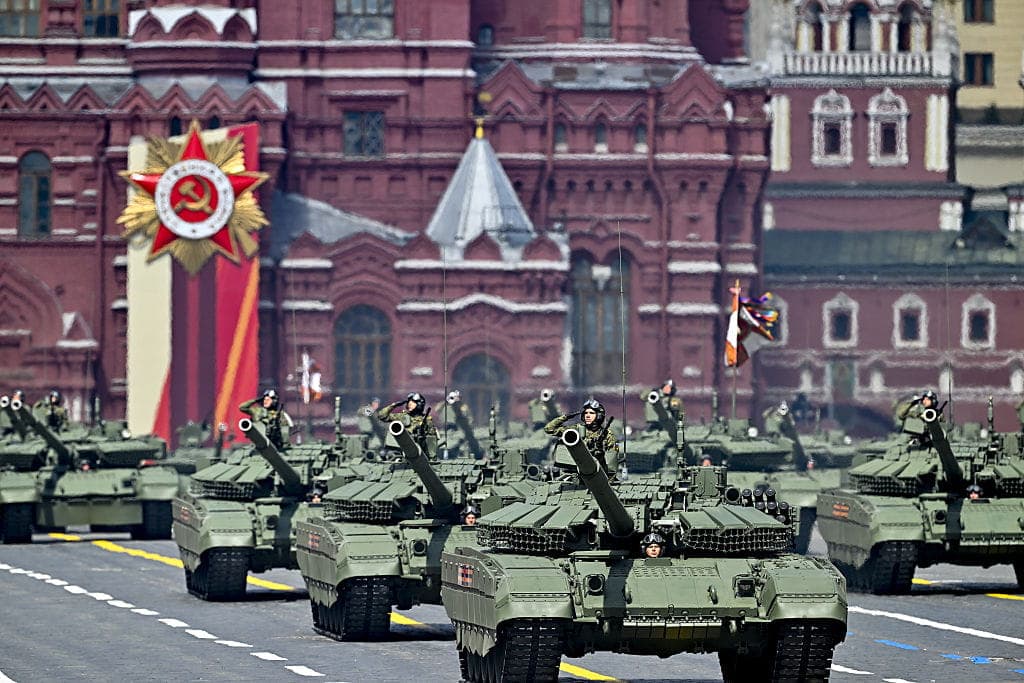
President Donald Trump on Friday expanded US sanctions on Cuba’s regime, signaling the island nation is still very much on his mind, as Operation Epic Fury entered its 60th day. Experts are reportedly calling the move a message to Russia and China – who are explicitly named in the president’s January 29 executive order imposing sanctions – to steer clear of the island.
Trump’s latest executive order comes after months of an intense pressure campaign, including an oil blockade to Cuba, and amid ongoing talks with the Cuban regime.
A delegation of senior State Department officials traveled to Cuba in April.
"The delegation reiterated that the Cuban economy is in free fall and that the island's ruling elites have a small window to make key U.S. backed reforms before circumstances irreversibly worsen," a State Department official reportedly told CBS News in April.
Expanded Sanctions
The president’s order imposes sanctions on “any foreign person” who is determined to operate in the energy, defense, metals and mining, financial services or security sectors of the Cuban economy. The order imposes sanctions on “any foreign person,” who “materially assisted, sponsored, or provided financial, material, or technological support for, or goods or services to or in support of, the Government of Cuba.” It also imposes sanctions on people who are complicit in “serious human rights abuse in Cuba,” and “corruption related to Cuba.”
The new measures could cut off foreign banks from US markets, if they continue to work with the Cuban regime.
More than 1.5 million people fled Cuba for the US since the early 1960s, after Fidel Casto led a guerrilla revolution that overthrew US-backed dictator Fulgencio Batista. Castro transitioned the government into a communist regime.
Miguel Díaz-Canel, president of Cuba, called the US’ increased sanctions, “coercive measures,” in an X post on Friday, adding, “No honest person can accept the excuse that Cuba poses a threat to that country. The blockade and its reinforcement cause so much harm due to the intimidating and arrogant conduct of the world's greatest military power.”
This came hours after the Cuban president posted his celebration of May 1 – and the centenary of Castro – with his nearly 95-year-old brother, Raúl, who was a key leader in the Cuban Revolution that catapulted the elder Castro to power. Raul’s appearance was reportedly seen by some as a projection of strength.
Trump brought up Cuba in his speech to the Forum Club of the Palm Beaches Friday evening, in the context of recognizing an architect who works with the president:
“Cuba, which we will be taking over almost immediately,” the president said, “Cuba's got problems. We'll finish one first. I like to finish a job…What we'll do, on the way back from Iran, we'll have one of our big, maybe the USS Abraham Lincoln aircraft carrier, the biggest in the world, we'll have that come in, stop about a hundred yards offshore, and they'll say, ‘Thank you very much. We give up.’”
Peacemaker and Unifier
The president has consistently said Cuba would be “next,” after the US military’s stunning capture of Venezuelan dictator Nicolas Maduro in January, and dramatic and decisive destruction of the Islamic Revolutionary Guard Corps’ (IRGC) terrorist regime.
At the Turning Point USA rally in Arizona last month, Trump said, “And very soon, this great strength will also bring about a day 70 years in waiting. It’s called A New Dawn for Cuba. We’re going to help them out with Cuba...Watch what happens.”
In his article, Long National Nightmare for Cuba Almost Over, Liberty Nation News Senior Political Analyst Tim Donner wrote the president’s plan “will stand as the third leg of Trump’s trifecta designed to change the course of history.”
President Trump has repeatedly said he wants to be remembered as a “peacemaker and unifier.” Whether history grants him that wish or not, his hard-fought ambitions will define his legacy.
.jpg&w=1920&q=75)
.jpg%20Minnesota&w=1920&q=75)